Choosing storage is not just about finding an empty box. A clear bin lets you see folded sweaters, spare cables, or holiday decorations without opening every container. A cardboard box hides its contents, unless you label it carefully. Small difference. It can save time during a move, a seasonal closet reset, or a search for one missing charger.
There is also a sustainability trade-off. The American Forest & Paper Association reported that roughly 46 million tons of paper were recycled in the United States in 2023. That figure shows cardboard’s established recycling value, but it does not tell us how well a particular box protects belongings at home. Moisture, repeated handling, and heavy stacking can weaken cardboard; plastic bins may offer more consistent protection, but they take up space and still need responsible reuse or disposal. Neither option wins every time.
So, Why use clear storage bins instead of cardboard boxes? The practical answer depends on what you store, where it sits, and how often you need it. A transparent tote on a garage shelf solves a different problem than a low-cost box used for a short move. This guide compares five clear storage bins with cardboard boxes by visibility, durability, stackability, and value. One caveat: product capacity and performance vary, so check dimensions and weight guidance before buying. A label still helps.
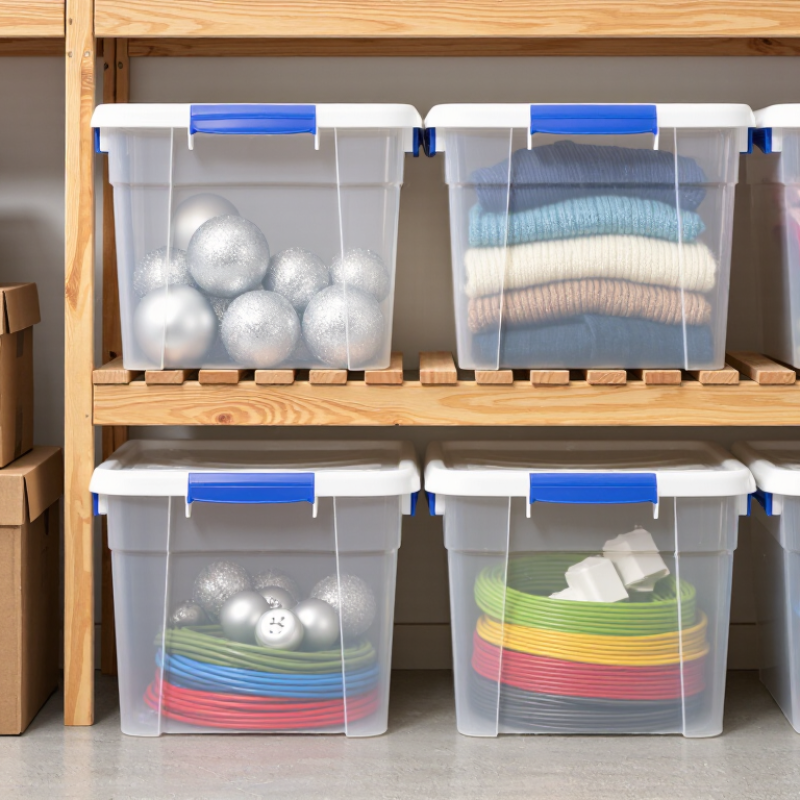
Clear storage bins are rigid containers, usually molded from transparent plastic, with fitted lids. Their see-through walls help you identify contents without opening each container. Some designs include handles, stackable edges, or gasketed lids. Not every lid seals tightly. Check the fit before storing items that need protection from dust or moisture.
Cardboard boxes are foldable containers made from paperboard or corrugated fiberboard. A fluted inner layer adds strength, while flat panels keep boxes light and easy to label. They can be stored flat when empty and reused after unpacking. They are opaque. A large handwritten label helps. Cardboard can soften when damp, and corners may wear after repeated moves, so inspect older boxes before stacking heavier loads.
Each type suits different storage habits. A clear bin works well for items you retrieve often, such as craft supplies, pantry backstock, or winter gloves. A cardboard box can suit lightweight belongings that stay packed, especially when easy labeling and recycling matter. I’ve found that transparent plastic can still hide small objects in a crowded bin; a divider may help. It is not magic. Box strength also varies with thickness and condition, a detail that’s easy to overlook.
Clear storage bins make contents visible without opening every lid. That helps with seasonal clothes, pantry overflow, or craft supplies. Many models stack neatly, but lids and molded rims can waste shelf height. Plastic handles minor spills better than cardboard, though it may crack under heavy loads or in cold garages. A clear wall is useful, not magic. Labels still help when bins sit high or gather dust.
Cardboard boxes are light, inexpensive, and easy to fold flat after a move. They suit dry, short-term storage and odd-shaped items better than rigid bins. However, corners soften with repeated handling, and moisture can stain or weaken the board. A box may hide small items until someone opens it. Neither option wins in every room. A mixed setup may look less uniform, but often works better.
Tips: Match the container to its location. Use lidded bins in damp-prone areas, and keep cardboard on dry, raised shelves. Put heavier objects at the bottom, avoid overfilling, and label two sides. If a box or bin feels too heavy to lift comfortably, divide the load. Clear bins can encourage overpacking, so check the weight before stacking.
Clear storage bins work best when their shape matches the job. A shallow, low-profile bin can slide beneath a bed for spare sheets or seasonal clothes. Measure the clearance first; carpet and bed frames often steal an inch. A gasketed, latching bin suits keepsakes or paper records that need extra protection from dust. It is not a guarantee against moisture, so store it in a dry place.
For closets, a stackable bin with straight sides makes better use of shelf space than a tapered one. Keep heavier items low, and check that the lid still opens when bins are stacked. Small handled bins are handy for craft supplies, cables, or pantry packets. Handles make them easier to carry, but tiny objects can vanish in a deep container. Labels help. Clear sides are useful, though they do not replace a label when bins sit high.
A ventilated bin can suit sports gear or other items that need airflow. It is a poor choice for anything that must stay clean or dry. Before buying several, test one bin in the intended spot with the actual contents. I have found that “standard” sizes are not always standard enough for older shelves. Keep frequently used items at waist height, and leave a little room to lift the lid without scraping a wall.
Clear storage bins work best when you need to identify items without opening every container. In a hallway closet, a transparent bin lets you find gloves, spare bulbs, or a first-aid kit at a glance. They are practical for damp-prone basements, too, because sturdy plastic resists minor splashes better than paperboard. Choose a size you can lift when full; a large bin packed with books can become awkward and may strain its handles. Lids also help keep dust off stored linens. But clear plastic can look cluttered on open shelves, especially when contents are mixed.
Cardboard boxes suit dry, tucked-away spaces and short-term moves. They are lightweight, easy to label, and often simpler to stack in a spare-room closet. A handwritten note on the side can be more useful than a clear wall when boxes sit on high shelves. Avoid using them where leaks, damp floors, or pests are likely; cardboard can soften, stain, or tear. One detail is easy to overlook: box sizes vary, so stacks may wobble. A little unevenness is normal. For seasonal decorations you rarely touch, boxes may be enough; for items you reach for weekly, clear bins save time.
Qualitative suitability ratings from 1 (poor fit) to 5 (strong fit), based on visibility, moisture exposure, reuse, cost, and handling. These are practical comparisons, not laboratory test results.
Clear bins are a strong choice for finding items quickly, damp-prone spaces, and repeated use. Cardboard boxes are often more practical for low-cost, one-time packing and lightweight moves.
5 Best Clear Storage Bins vs Cardboard Boxes
Choosing between clear bins and cardboard boxes starts with where items will live and how often you need them. Clear bins make stored contents visible, which helps when searching a closet for winter gloves or a particular cable. They also handle occasional handling better than softened cardboard. But transparent walls can create visual clutter, and sunlight may fade some contents. A bin is not automatically the better choice.
Cardboard boxes are lightweight, easy to label, and often simpler to recycle when they are clean and dry. They suit books, seasonal decorations, or items packed for a short move. Keep them off damp floors, and avoid stacking heavy boxes on top of weaker ones. One mistake I have made is choosing boxes by size alone; awkward gaps wasted more shelf space than expected. Measure the shelf and the items first.
Tips: Use clear bins for frequently accessed items, small supplies, or storage areas where dust is a concern. Choose sturdy cardboard for lightweight belongings that will stay dry and remain undisturbed. Label both the top and side, even when the contents are visible. Keep heavier objects low, and leave a little room to lift each container out. A quick inventory can help, though it may need updating.
| Storage Need | Clear Storage Bin | Cardboard Box | Best Choice |
|---|---|---|---|
| Seasonal clothing and linens | Contents are easy to identify without opening the container. A lidded bin helps keep out dust and reduces exposure to splashes. | Inexpensive and easy to label, but offers less resistance to moisture and can attract pests if stored in damp areas. | Clear bin for closets, basements, or frequent access. |
| Holiday decorations | Visibility helps locate decorations, while a sturdy bin can protect items from bumps during handling. | Works for lightweight, non-fragile decorations in a dry, low-traffic location; boxes may crush under heavy loads. | Clear bin for fragile or repeatedly used decorations. |
| Moving household items | Reusable and useful for items that need extra protection, but rigid bins can be bulky and heavier to carry. | Usually lightweight, available in many sizes, and easy to label; use suitable packing materials for fragile items. | Cardboard box for most general moving; bins for items needing added protection. |
| Documents and keepsakes | Contents are visible, but ordinary plastic bins are not automatically archival or fully airtight. | Suitable for short-term use in a clean, dry place; cardboard can be affected by humidity and pests. | Either can work in a dry indoor space; use archival-quality materials for valuable documents. |
| Garage or utility storage | Durable bins are convenient for tools and supplies, and transparent sides make contents easier to find. | Useful for lightweight items kept away from damp floors, leaks, and heavy stacking. | Clear bin for repeated access or variable conditions; keep all stored items dry. |
| Overall comparison | Reusable, easy to inspect, and generally more resistant to splashes and crushing; often costs more and takes up storage space when empty. | Low-cost, lightweight, recyclable where local facilities accept it, and easy to fold or replace; less durable if wet or overloaded. | Choose based on access, protection, budget, and storage conditions. |
Note: Performance varies by material, lid design, box grade, and storage conditions. Neither ordinary clear bins nor cardboard boxes should be assumed to be waterproof or pest-proof.
Use one beneath a bed for spare sheets or seasonal clothes. Measure the clearance first. Carpet can steal an inch.
No. A gasket and latch help reduce dust, but they do not guarantee moisture protection. Keep keepsakes and paper records somewhere dry.
Straight-sided, stackable bins usually use shelf space more efficiently than tapered bins. Keep heavier items low, and check that stacked lids can still open.
They work well for cables, craft supplies, or pantry packets. Tiny objects can disappear in a deep bin. Labels help.
Use one for sports gear that needs airflow. Avoid it for items that must stay clean or dry.
Clear bins suit frequently accessed items, small supplies, and dusty storage areas. Cardboard works for lightweight belongings kept dry and undisturbed. Neither option fits every space.
Measure the shelf and the items before buying containers. I once chose boxes by size alone, and awkward gaps remained.
Test one in its intended spot with the actual contents. Leave room to lift the lid without scraping a wall. “Standard” sizes can still surprise you.
Clear storage bins and cardboard boxes both help organize belongings, but they serve different purposes. Clear bins make it easy to see what is inside, protect contents from dust and moisture, and can be reused over time. Cardboard boxes are lightweight, easy to label, and often a practical choice for short-term storage or moving. Comparing their durability, visibility, cost, stackability, and protection can help you choose the right option for each task.
This guide introduces five types of clear storage bins suited to different needs, from everyday household organization to storing items that require extra protection. It also explains where each option works best and how to select between them based on your budget, storage space, and how often you need to access your belongings. Considering Why use clear storage bins instead of cardboard boxes can help you decide when visibility and long-term reuse matter more than low cost and easy disposal.

URneat Furnish