Choosing the right sneaker box sounds simple, but shoe shapes vary more than many shoppers expect. Low-top canvas sneakers may fit comfortably in a compact box. High-top basketball shoes, thick midsoles, and oversized running shoes need extra height and length. This guide explores seven practical shoe box sizes, helping you answer the question, “What size shoe box do I need for sneakers?”
Professional organizer Andrew Mellen offers a useful storage principle: “Don’t put it down; put it away.” For sneaker storage, that means giving every pair a stable, protective home. A box should hold the shoes without crushing collars, bending soles, or forcing the lids closed. Measure the longest shoe, the widest section, and the tallest point before buying. Then add a small clearance allowance.
Brand sizing is inconsistent. It can be frustrating. A men’s size 10 box from one company may feel tight beside another brand’s size 10 box. Women’s sneakers, children’s shoes, boots, and bulky limited-edition designs can also require different dimensions. Transparent boxes improve visibility, while cardboard boxes offer easier stacking and better light protection. Still, neither option solves poor measurements.
This overview compares common box dimensions, materials, ventilation, and stacking strength. It also highlights mistakes that are easy to overlook, such as storing damp shoes or ignoring extra laces. The perfect box does not exist for every sneaker. The best choice balances protection, access, available shelf space, and realistic daily use.
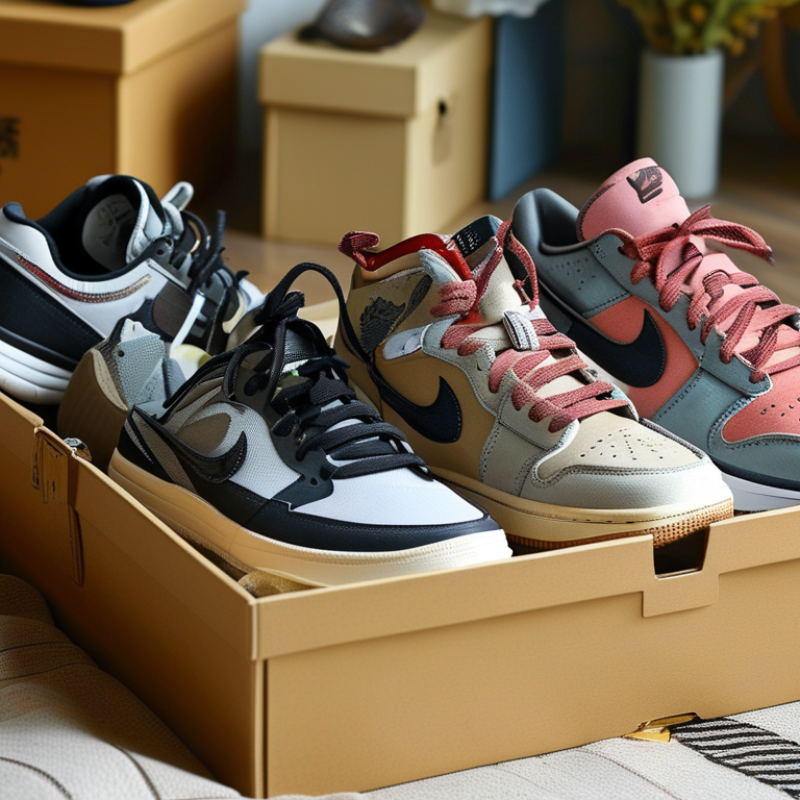
Understanding standard sneaker box dimensions helps you choose storage that protects shoes without wasting space. In my experience, measuring the shoe matters more than trusting a printed size label. Measure the longest shoe from heel to toe, then add about 1 inch for length and width. Add extra height for thick soles or high collars.
Common sneaker box sizes include 12 x 7 x 4 inches, 13 x 8 x 5 inches, and 14 x 9 x 5 inches. Larger options may measure 15 x 10 x 6 inches, 16 x 11 x 6 inches, 17 x 12 x 7 inches, or 18 x 13 x 7 inches. These dimensions usually describe the outside of the box, not the usable interior. That difference can be surprisingly important.
Low-profile sneakers often fit smaller boxes, while padded or oversized pairs need more room. A snug box can bend the heel counter and flatten the tongue. A loose box may let the shoes slide and collect dust unevenly. Clear plastic boxes are convenient, but ventilation still matters in humid rooms. Cardboard allows some airflow, though it can weaken near moisture. I would recheck every measurement before buying several boxes. My earlier estimates were too optimistic for thicker soles. Sizes also vary between manufacturers, so use a ruler and compare internal dimensions whenever possible.
Standard sneaker boxes commonly range from compact 12 × 7 × 4 inch boxes to larger 18 × 12 × 7 inch boxes. The chart compares representative box dimensions for different sneaker styles and storage needs.
Dimensions are nominal external measurements in inches and can vary by manufacturer. For a reliable fit, allow extra space for cushioning, high-top collars, thick soles, or tissue paper. A box around 14 × 10 × 6 inches is a practical general-purpose choice for many adult sneakers.
Matching the box to your sneaker type prevents creases, crushed collars, and wasted shelf space. From my packing experience, low-top sneakers usually fit a box measuring about 13 x 8 x 5 inches. This size leaves limited room around the shoes, but it works well for slim everyday pairs.
For wider running shoes, choose approximately 14 x 9 x 5 inches. The extra width protects thick midsoles and padded tongues.
High-top sneakers need more height, especially around the ankle collar. A box near 14 x 9 x 6 inches offers better clearance without excessive movement. Bulky basketball or platform styles may need 15 x 10 x 6 inches.
Measure the shoes together, heel to toe, before buying boxes. Add about one inch to each measurement, but avoid oversized boxes. Too much empty space lets sneakers slide during handling.
Tips:
Check the interior dimensions, not only the advertised exterior size. Place tissue paper around the shoes, then test the lid gently. It should close without pressing the collar.
I once used a box that seemed large enough, yet its narrow opening bent the heel counter. That mistake was avoidable.
Box shapes also vary, so measurements are more reliable than size labels. For long-term storage, use dry, breathable materials and leave slight airflow around the sneakers.
A shoe box should fit the sneakers, not merely match the printed size. Measure each shoe from heel to toe, then measure its widest point. Use the larger measurement. In my storage tests, low-top sneakers usually fit an internal box size of about 13 by 8 by 5 inches. Leave at least half an inch around the shoes. That space prevents crushed collars and bent toe areas. Too much empty room can also cause shifting during handling.
High-top sneakers need more height and width. A box measuring 14 by 10 by 6.5 inches often works better for bulky pairs. Shoes with thick soles may need extra depth. Check the internal dimensions, because external measurements include cardboard thickness. Place the shoes heel-to-toe, or stack them carefully if the box allows it. Keep laces loose and avoid forcing the lid closed. It may seem secure, but pressure can leave permanent creases.
Very wide sneakers are harder to size accurately. I would choose a larger box and add plain paper around the sides. Foam can trap moisture, especially in warm storage areas. That detail is easy to overlook. Before buying several boxes, test one with your largest pair. My own first estimate was too tight. Measuring again saved space and prevented damage.
The best shoe box size depends on storage, shipping, and display needs.
For small adult sneakers, a 13 x 8 x 5 inch box usually fits well. Slim pairs may fit in 12 x 7 x 4 inch boxes.
Larger shoes need 14 x 9 x 5 or 15 x 10 x 6 inch boxes. Measure the shoes together, including their widest sole points.
A tight fit can crush padding and deform the upper.
For storage, 16 x 11 x 6 inches offers extra room without wasting too much shelf space. A 17 x 12 x 7 inch box works better for high-top styles or thick protective wrapping.
The largest practical option is about 18 x 13 x 8 inches. It suits oversized pairs, but stacked boxes become heavy and less stable. Leave a little clearance. Not too much. Empty space allows movement and weakens stacking.
Shipping requires more restraint. Larger boxes increase dimensional weight, even when the shoes are light.
I usually add a thin paper layer, then check whether the lid closes without pressure.
For display, clear panels help identify pairs quickly, while rigid walls prevent leaning on open shelves.
My first size chart was too optimistic; wide soles needed nearly an extra inch. That mistake taught me to measure real shoes, not rely only on printed size labels. Test one packed box before ordering in bulk.
Choosing a sneaker box is not only about finding the largest option. Measure the shoe length, width, and height while wearing its usual laces and inserts. Add about 1 to 2 centimeters of clearance on each side. Common internal sizes include 13 × 8 × 5 inches, 14 × 9 × 5 inches, and 15 × 10 × 6 inches. Larger high-top shoes may need 16 × 11 × 7 inches or more. Seven useful size ranges can cover children’s shoes, low-tops, high-tops, bulky trainers, and oversized pairs.
A frequent mistake is measuring the outsole alone. The upper can press against the lid, especially around the ankle collar. I once chose a box that matched the outsole perfectly. It looked efficient, but the lid bent after several weeks. That choice was wrong. Leave room for tissue paper, because tightly packed shoes can lose their shape. Avoid excessive space, too. Shoes may slide, rub, and crease during handling.
Check the box’s internal dimensions, not its outside measurements. Manufacturers often list the exterior size, which can hide thick cardboard walls. A sturdy, breathable box helps protect shoes from dust and trapped moisture. Store it away from direct sunlight and damp floors. Clear plastic containers may seem convenient, but poor ventilation can create an unpleasant smell. I also prefer testing one box before ordering many. Measurements vary slightly, and real shoes rarely behave as neatly as a size chart suggests.
: A box around 13 x 8 x 5 inches usually fits slim, everyday pairs. It leaves limited space. Measure the shoes together before choosing.
Choose about 14 x 9 x 5 inches. The extra width protects thick midsoles and padded tongues. A narrow box may crush the sides.
A 14 x 9 x 6 inch box usually provides better ankle clearance. The lid should close without pressing the collar. Check the opening, too.
Try approximately 15 x 10 x 6 inches. These styles often have thick soles and taller uppers. Do not leave excessive empty space.
Measure both shoes together, heel to toe. Include the widest sole points and the highest collar. Add about one inch to each measurement. That rule is not perfect.
A 16 x 11 x 6 inch box offers useful extra room. For high-tops or thick wrapping, consider 17 x 12 x 7 inches. Use dry, breathable materials. Leave slight airflow.
Use the smallest box that protects the shoes without pressure. Large boxes can increase dimensional weight. Add one thin paper layer, then test the lid. More space is not always better.
Clear panels make pairs easier to identify. Rigid walls help boxes remain upright on open shelves. Measure the inside dimensions, not only the advertised outside size. My earlier size chart was too optimistic.
Choosing the right sneaker box starts with understanding standard dimensions and how they relate to your footwear. Most adult sneakers fit comfortably in a rectangular box that allows extra room for the shoe shape, cushioning, and laces, while high-top, bulky, or heavily padded styles may require a larger size. If you are asking, “What size shoe box do I need for sneakers,” begin with your shoe length and width, then select a box with a few centimeters of clearance on every side. Smaller shoes generally need compact boxes, while larger sizes and unusual designs benefit from additional space.
Your storage goal also matters. A snug box is efficient for stacking and closet organization, while a sturdier, roomier box is better for shipping or protecting delicate materials. Display boxes may prioritize transparency and neat presentation, whereas long-term storage requires ventilation and moisture resistance. Avoid choosing a box based only on shoe size, ignoring height, or packing footwear tightly, as these mistakes can cause creasing, deformation, and poor airflow.

URneat Furnish